A new roof is one of the most important investments you’ll make in your home, but even the highest-quality roofing system can fail years before it should if your attic isn’t properly ventilated.
Throughout Mid-Michigan, we regularly inspect roofs in Flint, Burton, and surrounding communities that have suffered premature deterioration because the attic ventilation system was never upgraded when the roof was replaced.
Without balanced intake and exhaust ventilation, your attic traps heat and moisture year-round. During the summer it becomes an oven that slowly destroys your shingles. During the winter it creates the perfect conditions for damaging ice dams. Proper attic ventilation isn’t an upgrade—it’s a critical part of every complete roofing system.
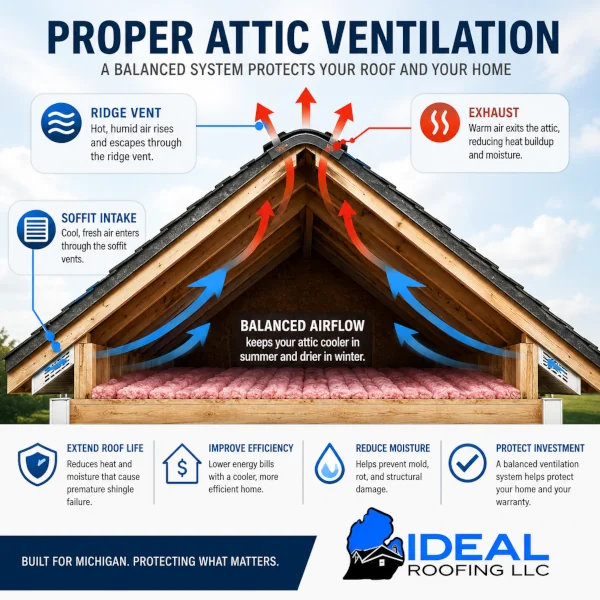
Balanced attic ventilation protects shingles, insulation, roof decking, and your home’s energy efficiency.
Summer: The Hidden “Oven Effect” Destroying Your Roof
On a typical Michigan summer afternoon, attic temperatures can exceed 150°F. That trapped heat doesn’t simply make your home uncomfortable—it begins attacking your roofing system from underneath.
During roof inspections throughout Grand Blanc, Flushing, and surrounding Mid-Michigan communities, we’ve seen roofs designed to last 30 years showing significant deterioration after only 12 to 15 years because the attic simply couldn’t breathe. As the roof deck overheats, shingles begin to lose protective granules, curl, blister, and age far faster than intended.
Winter: Why Poor Ventilation Creates Ice Dams
Michigan winters create a completely different problem.
Warm air escaping from your living space heats the underside of your roof, melting accumulated snow. As the water reaches the colder roof edges, it freezes into thick ridges of ice known as ice dams.
Homes throughout Lapeer and Metamora frequently experience this issue. Once ice dams form, water can back up beneath the shingles and leak directly into your attic, insulation, ceilings, and walls.
Proper attic ventilation keeps the roof deck at a more consistent temperature, dramatically reducing the freeze-thaw cycle responsible for most ice dam formation.
Common Signs Your Roof Ventilation Is Failing
- Large ice dams forming along the roof edge or gutters during winter.
- Persistent musty odors or mildew coming from the attic.
- Dark roof decking, mold growth, or rusted roofing nails visible inside the attic.
- Shingles that appear curled, blistered, or “burned” even though the roof is less than 15 years old.
- Higher-than-normal cooling costs during Michigan summers.
- Uneven snow melt across the roof during winter, indicating heat escaping through the attic.
Engineering the Right Airflow
At Ideal Roofing LLC, we don’t simply install another vent and hope for the best. Every roofing system begins with calculating the proper Net Free Vent Area (NFVA) to create a balanced airflow system between intake and exhaust.
That process is especially important on many older homes throughout Davison, Swartz Creek, and neighboring Mid-Michigan communities where blocked soffits, outdated construction methods, or previous roofing projects have disrupted the natural airflow your attic was designed to have.
Soffit Intake
Fresh outside air enters through properly installed soffit vents, creating the airflow needed to cool the attic while reducing moisture buildup.
Continuous Ridge Vent
Hot, humid air naturally rises and exits through a continuous ridge vent, helping maintain a consistent attic temperature throughout the year.
Ventilation Baffles
Baffles prevent insulation from blocking airflow between the soffits and roof peak, allowing the entire ventilation system to function as designed.
Protect Your Roof Investment—and Your Warranty
Most major roofing manufacturers require proper attic ventilation for warranty coverage. Even premium shingles cannot perform as designed if excessive heat and moisture become trapped beneath the roof deck.
A properly engineered ventilation system helps your roof last longer, improves your home’s energy efficiency, reduces the risk of ice dams, and protects the investment you’ve made in your entire roofing system.
Does Every New Roof Need New Ventilation?
Yes. Every roof replacement should include an evaluation of the attic ventilation system. Many roofs fail prematurely because the shingles were replaced while the ventilation was left unchanged. At Ideal Roofing LLC, every roof inspection includes an assessment of intake ventilation, exhaust ventilation, and overall attic airflow to help maximize roof life and protect your manufacturer’s warranty.
Is Your Attic Quietly Destroying Your Roof?
Schedule a free roof inspection with Ideal Roofing LLC. We’ll inspect your roof, evaluate your attic ventilation system, and explain whether simple ventilation improvements could extend the life of your roof.